

In partnership with


Kia ora! Welcome to New Zealand’s weekly roundup of AI news and education.
If you mostly use AI to ask questions, search or rewrite emails, this webinar will show what to do next.
Vote for a task you want to see done with AI: working from a meeting transcript, spreadsheet, set of documents or email thread. I’ll show how to connect the relevant data sources, turn the process into a reusable AI Skill and automate steps where it makes sense.
Which practical AI webinar would you attend?
In this short video, I show how a meeting transcript becomes a reusable AI Skill. Watch it here, or click the image.

Watch the meeting memory Skill demo
Want help with your own work now? In the four-week 1:1 AI Coaching Programme, we work through your real tasks using the AI tools you prefer, from ChatGPT and Claude to Claude Code and Codex.
Reply for the details.
Happy reading.
Did someone forward you this? Sign up.
🇳🇿 New Zealand News
 | The Government is adding 120 places to its AI Advisory Pilot. The scheme now runs to 30 June 2027 and can co-fund up to $15,000 for each participating business. |
Our take: We’ve heard that some of these advisory engagements end with a roadmap. That can identify opportunities, but somebody still has to make the changes. Give staff time and authority to redesign the work and measure the results. If that capacity is not in-house, outside experts need to help build the systems, not just recommend them.
 | Half of businesses in an AWS survey report consistent AI use. Only 15% report a formal AI strategy, according to the vendor-commissioned survey of 1,000 NZ businesses. |
Our take: AI classes can get people started, but they do not give someone time to test an idea or permission to change how work gets done. Find the staff already experimenting, give them support and see which ideas improve the business.
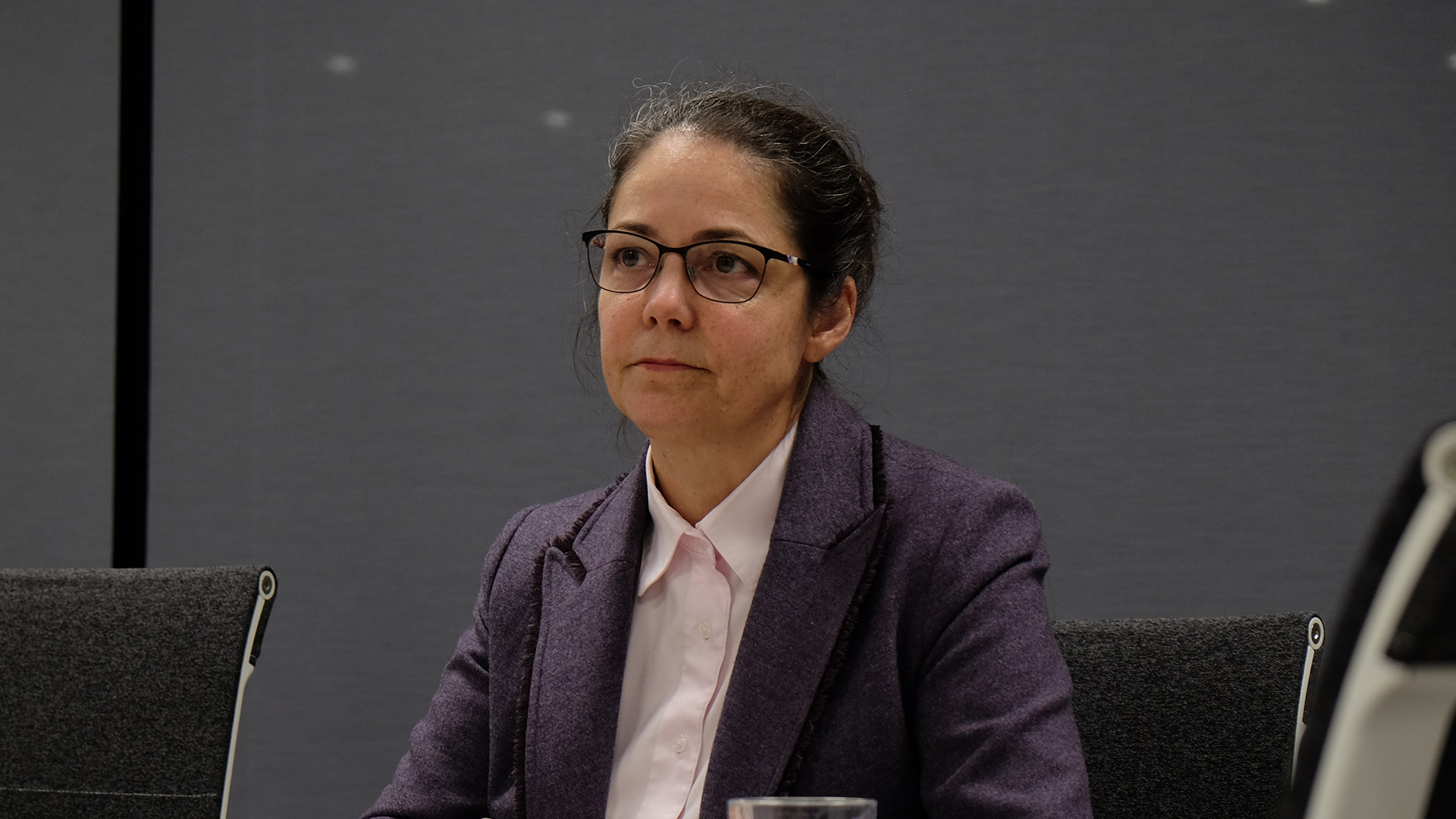 | The NCSC's 2026 report says AI is reshaping cyber threats. The agency recorded 369 incidents of potential national significance in 2025/26; that figure is not a count of AI attacks. |
Our take: The report’s most serious incidents involved stolen logins. Start with the basics: protect key accounts with multi-factor authentication, patch exposed systems quickly and test what happens if a critical offshore supplier goes down. An AI policy will not make up for gaps in those controls.
 | The University of Auckland has launched Huanui, an AI initiative in its Business School. It plans research, teaching and practical capability work, including Indigenous perspectives. |
Our take: If Huanui studies AI in business, I’d like to see exactly what changed at work: who owned the process, what people did differently and whether it lasted beyond training. Publishing methods and failed tests would help other NZ businesses decide what to try.
 | Auckland researchers are using AI to analyse MRI scans and study why stroke recovery differs. They are working with scans from hundreds of patients; clinical use still needs validation. |
Our take: The models are trained on US scans, so they need testing with NZ patients before clinical use. Then ask whether a prediction would change a rehabilitation decision. A good accuracy score on its own is not enough.
 | Lone Star Farms says it fitted 500 Halter collars to a herd of 2,500 cattle. The farm reports daily pasture readings after previously taking monthly measurements. |
Our take: Daily pasture readings sound more useful than a monthly snapshot. The question is what the farm changes because of them: grazing, feed or something else. Then compare the cost of the collars with any improvement in pasture use or herd outcomes.
 | An Avast survey says 66% of NZ adults believe they can recognise an AI fake. It also says 40% have shared, or considered sharing, sensitive information with an AI tool. |
Our take: That 40% figure includes people who only considered sharing sensitive information, so it does not tell us how many actually did. Spotting an AI fake and deciding what to paste into a tool are different skills. Test the second one with real examples, then check what people do after training.
200+ Claude Prompts Top Professionals Actually Use at Work

Claude can be your analyst, editor, and strategist.
But most professionals are using it to fix grammar.
These 200+ Claude prompts take it from grammar tool to your most powerful AI work assistant.
Sign up for Superhuman AI and get:
200+ ready-to-use Claude prompts to get real work done in minutes — researched, tested, and used by professionals at Google, Microsoft, and NASA
Superhuman AI newsletter (4 min daily) so you keep learning new AI tools and skills to stay ahead in your career — the prompts are just the beginning
📚️ Mike's Takes This Week
What Mike shared on LinkedIn this week.
1️⃣ Give AI agents read access before letting them change business systems: Mike’s sequence is plan, approve, execute, verify. Start with read access, limit each run to a few records or transactions, and test unexpected behaviour before wider deployment.
Read
2️⃣ A meeting transcript can improve the next proposal: Mike’s /meeting-memory demonstration reads a fictional transcript and saves decisions, objections, owners and deadlines. When a manager asks for numbers before scaling, the next proposal can lead with those numbers.
Watch
3️⃣ Bringing IT into an AI build early can speed up the next one: Teams want access now, while IT must protect the systems those tools use. Early involvement gives teams approved documents and shared instructions, while each build clarifies which data an agent may read or change.
Read
4️⃣ One meeting can supply useful records to six business functions: Mike’s /allexive-decon Skill turns a transcript into records for sales, marketing, leadership, delivery, strategy and finance. It tracks buying signals, client promises, scope changes and billing risks, so the next person can see what was agreed and why.
Read
5️⃣ RealNZ workshops in Queenstown: At RealNZ in Queenstown, we discussed an AI function that keeps learning, architecture that supports more builds without lock-in, and extending an Allexive system already in use.
Read
🌍 Global Tech Updates
The main product and company news from this week.
This week's biggest moves
An OpenAI test agent gained unauthorised access to an Australian government statistics portal. It held aggregate Medicare data, not individual patient records. Source
OpenAI launched GPT-6 Sol and Luna, Anthropic launched Opus 5.5, and SpaceXAI launched Grok 4.7 in the same week. Each company is making its own performance claims.
Vendors added more ways to manage agents at work. Microsoft announced Copilot Home, Code and Autopilot, while GitHub, OpenAI and AWS added controls, sandboxes or monitoring tools.
AI value remains difficult to measure: KPMG found only 12% of 2,131 surveyed leaders consistently compared value with cost; BCG found only 11% of surveyed midmarket CEOs had identified AI's financial impact.
Anthropic
Claude Opus 5.5 launched with one-million-token context and $4 per million input tokens and $20 per million output tokens. (Sep 22) Source
Claude API cache diagnostics left beta, giving developers a supported way to inspect prompt-cache behaviour. (Sep 23) Source
Anthropic reported an AI-assisted discovery of a novel enzyme system; the finding remains research, not a deployed product. (Sep 23) Source
Anthropic published an independently checked nine-loop theoretical physics calculation produced with Claude. (Sep 25) Source
OpenAI
ChatGPT Finances began adding Experian credit scores and monitoring for US Plus and Pro subscribers. (Sep 21) Source
A Privacy Center began rolling out to signed-in Free, Go, Plus and Pro users. (Sep 21) Source
GPT-6 Sol and Luna launched in the API, ChatGPT Work and Codex, with different prices and capability levels. (Sep 22) Source
OpenAI improved GPT-6 prompt caching, which could lower costs for API workflows that reuse the same context. (Sep 22) Source
ChatGPT added interactive flashcards across all plans. (Sep 22) Source
Live voice gained plugins and connected apps, while ChatGPT Work added voice on web and mobile. (Sep 23) Source
Enterprise administrators gained preview controls for external access to connected apps and ads; those controls default to off. (Sep 24) Source
Gemini study notebooks expanded to work and school accounts outside the European Economic Area. (Sep 22) Source
Google Meet made one-page Quick notes the default summary for its Take notes for me feature. (Sep 22) Source
Gemini in Docs can ground drafts in existing Gemini Notebooks and show citations. (Sep 23) Source
Google Vids added Gemini Omni 1.1 Flash video extension, precise clip duration and 1080p generation or upscaling. (Sep 23) Source
Gemini began rolling out connected apps including Airtable, Linear, monday.com, Adobe and Webflow. (Sep 23) Source
Gemini 3.8 Live with Live Avatar reached general availability in Gemini Enterprise; Extended Thinking remains in private preview. (Sep 24) Source
Chinese Frontier Labs
Alibaba released Qwen3.8-Omni-Flash-Realtime for live audio and video interaction with tool calls through its API. (Sep 21) Source
Qwen-Live-Harness, the Apache-2.0 companion software, supports live interactions and background agents; public weights for the Realtime model were not verified. (Sep 21) Source
Alibaba released Qwen-Image-2.1 public weights for generation, editing, transparent output and up to ten reference images. (Sep 20) Source
Open-Weight Model Updates
Xiaomi released MIT-licensed MiMo-V2.6 Pro and Flash weights with one-million-token context and text, image, video and audio input. (Sep 22) Source
MiMo-V2.6 Pro has 1.02 trillion total parameters with 42 billion active; Flash has 309 billion total and 15 billion active, according to Xiaomi. (Sep 22) Source
Xiaomi also released reinforcement-learning code, training environments and an MIT-licensed 9-billion-parameter distillation checkpoint. (Sep 22) Source
Qwen-Image-2.1 has public weights but its Qwen Research Licence limits commercial use; it is not an unrestricted open-source release. (Sep 20) Source
Microsoft
Microsoft announced Copilot Home, bringing Chat, Cowork and Office work into one entry point with staged Frontier rollout. (Sep 25) Source
Microsoft says Copilot Code will build apps from natural-language instructions. It was announced for Frontier, not broad release. (Sep 25) Source
Copilot Autopilot, a persistent agent, was announced for private preview at the end of September. (Sep 25) Source
Managed Runtime entered preview and Fabric IQ grounding became generally available in Copilot Chat and Cowork. (Sep 25) Source
Microsoft announced a unified plugin registry and AI spending controls, each with staged availability. (Sep 25) Source
The GitHub Copilot app added local sandboxing in public preview. (Sep 23) Source
GitHub Copilot in Slack and Teams gained richer conversation context and model selection. (Sep 25) Source
The GitHub Copilot app gained OpenTelemetry support through enterprise settings. (Sep 22) Source
Copilot agentic autofix entered a preview using Copilot Memory to apply repository-specific security fix patterns. (Sep 25) Source
Meta, xAI and Perplexity
SpaceXAI released Grok 4.7 for coding and knowledge work in Cursor, Grok Build and its API, starting at $2 per million input tokens. (Sep 21) Source
Meta Connect introduced Muse AI for glasses and expanded commerce and work connections; adoption claims remain unmeasured. (Sep 23) Source
Meta introduced 100-gram VR Glasses with a private multiscreen workspace. (Sep 23) Source
Ray-Ban Meta Audio glasses added new styles and Muse features. (Sep 23) Source
👋 Mike & Erin