


Kia ora! Welcome to New Zealand’s weekly roundup of AI news and education.
Microsoft’s CEO writes some of the best essays on where AI is heading for enterprises.
In Satya Nadella’s latest article, models are treated as potential insider risks. He calls out that responsibility stays with the organisation (not the mode provider); permissions must be enforced outside the model, with activity records it cannot alter; verification must be independent, and humans must be able to stop it (bring on the kill switch).
That means containment, auditing and security, including fixing existing gaps in IT permissions, testing and governance. It is the necessary work, even when it is boring… But so much of the existing IT stack needs work to ensure businesses are ready for agents.
We’ve got some heavy hitters from New Zealand’s biggest companies coming on the podcast over the next few months. Stay tuned.
Want help building your setup? My four-week 1:1 AI Coaching Programme works around your tools and actual workflows. Reply for the details.
Happy reading ✌️
Did someone forward this? Sign up.
🇳🇿 New Zealand News
 | Datacom says it spends NZ$500,000 a month on AI coding tokens. CEO Greg Davidson says success means completed, reliable work, with agents given acceptance criteria, tests and a record of what they changed. |
Our take: Engineering, business teams and the CEO need different measures of token spending. Engineering needs the cost of a task that passes its checks, including retries and corrections. Business teams need the cost per customer served, with staff review time included. Finance needs to check whether savings and extra revenue exceed the full operating cost as usage grows. The CEO needs to know which new services or customers become viable at that cost. A higher AI bill could be worthwhile if it lets the business serve customers it previously couldn’t afford to serve.
 | NZ Adviser reports 87% AI adoption among surveyed NZ financial planners. The study included 104 NZ respondents, while globally seven in 10 expect wider access for underserved groups and 68% expect cheaper advice. |
Our take: Cheaper advice could change who gets a financial plan in the first place. If AI reduces preparation costs, advisers could serve households whose smaller budgets previously made personalised advice uneconomic. That changes both the adviser’s work and the customers they can serve. Debates about job losses also need to consider what happens when professional advice becomes affordable to more households.
 | NZIER says youth unemployment reflects more than a weak economy. Its new report examines structural barriers and the uncertain effect of AI, with unemployment at 25.3% for 15 to 19-year-olds and 12% for 20 to 24-year-olds. |
Our take: Juniors need practice making decisions, and first drafts have been one way to get it. AI gives firms a reason to design that practice differently. A junior could challenge an AI draft with an assistant configured for their role, then explain proposed changes to a senior mentor. Earlier client contact and time listening to senior colleagues discuss decisions would add experience beyond drafting. For a law graduate, that means understanding why a clause protects a client, then checking whether the draft does it. Firms can build that apprenticeship deliberately, giving graduates more useful practice from the start.
 | Half of responding community sports clubs say they use AI. NZASA and AUT research drew over 750 responses across 66 sports, with 77% of AI-using clubs leaving adoption to individual initiative. |
Our take: Club administration often includes children’s details, finances and private messages. A few clear rules about which information belongs in generative software would help volunteers use it without becoming unpaid privacy specialists.
 | Staff and students are questioning consultation on TEC’s proposed AI deal. The tender seeks licences and implementation support for tertiary institutions, with up to 420,000 users used for pricing rather than guaranteed uptake. |
Paywalled by BusinessDesk. The public tender includes implementation support, leaves participation to institutions and closes on 23 October.
Our take: Buying together could improve prices, but staff still need to test which teaching tasks the tools can help with. The implementation support in TEC’s tender should fund that work before institutions commit to licences across their courses.
 | Newly released briefings describe pressure on NZ to join Project Arcadia. RNZ reports warnings about future Five Eyes access and uncertain costs for the US-led digital system, with AI among its intended capabilities. |
Our take: NZ depends on partners for intelligence it cannot collect alone. That makes the cost over time and control of shared systems a practical question, because leaving later may be harder than joining now.
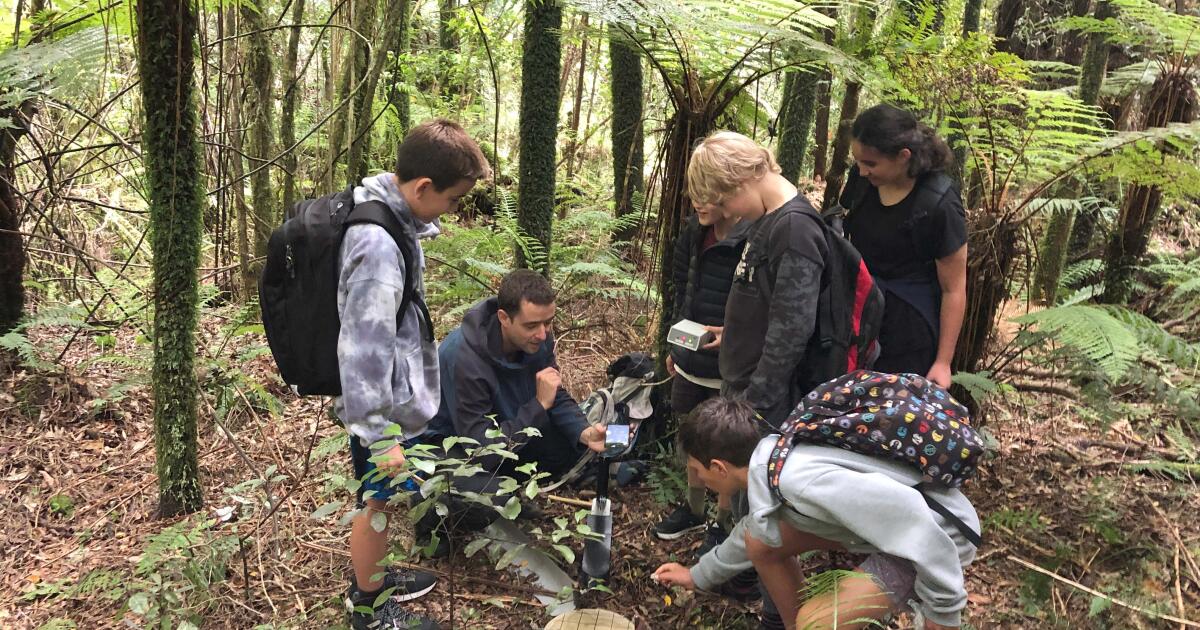 | Two Taranaki conservation initiatives have outlined their work in a Google AI accelerator. 800 Trust’s Hark and Wildlife.ai’s camera tools use sound and images for conservation, in a local update on Google’s September selections. |
Our take: Conservation teams need useful sightings and recordings rather than an ever-growing pile of files. A tool earns its place when it helps them decide where to put scarce field time.
 | RNZ has revisited the gap between agriculture’s interest in AI and its readiness to use it. It draws on an earlier AWS survey reporting under 40% adoption in agriculture, forestry and fishing, alongside interviews about the skills needed to use AI. |
Our take: A useful farm tool has to fit the season, the equipment and the decisions already being made. Demonstrating that fit may matter more than another broad promise about productivity.
📚️ Mike's Takes
Helping leaders and teams adapt, learn, and scale with AI.
1️⃣ Turn individual corrections to your work in AI into rules the whole team can reuse: Mike demonstrates improving a meeting agenda, then saving that correction as reusable instructions for the next run. A workflow owner decides which changes become shared standards, so one person’s preference does not automatically become everyone’s rule.
Watch.
2️⃣ An AI lead needs authority to change how teams work: Promoting an enthusiast, hiring a specialist or bringing in a partner each solves part of the problem. Mike uses a quoting example to explain why finance and operations must also change, and why someone inside must maintain the system afterwards.
Read.
3️⃣ Connected apps become more useful when teams keep what they learn: Pulling information from inboxes, Slack and HubSpot still leaves people explaining the same business rules repeatedly. Mike shows how shared instructions and reviewed corrections can give the next person a better starting point while keeping the existing apps.
Watch.
4️⃣ Paying for AI still leaves the problem of finding useful work: More capacity does little if people cannot identify tasks to delegate. Mike explores how AI could spot repeated steps, such as a weekly spreadsheet report, and suggest workflows for teams to assess, with agreed access to the relevant apps.
Read.
🌍 Tech Updates From Global
The selected top headlines from each major AI tech company.
Anthropic
Haiku 5.5 launches for high-volume work across Claude, AWS, Google Cloud and Azure. (Oct 7) Read
Haiku 5.5 API pricing starts at US$0.10 input and US$0.50 output per million tokens for prompts up to 100,000 tokens. (Oct 7) Read
Haiku 5.5 introduces adjustable reasoning effort, letting developers choose how much thinking the smaller model performs. (Oct 7) Read
Sonnet 5.5 cache-read pricing halves from US$0.20 to US$0.10 per million input tokens. (Oct 7) Read
Claude Max adds monthly API credits of US$100 for Max 5x and US$200 for Max 20x. (Oct 7) Read
Claude Team subscriptions gain up to US$500 in pooled monthly API credits for eligible teams. (Oct 7) Read
Claude’s Python and TypeScript SDKs add computer-use and browser-use support in beta for developers building agents. (Oct 7) Read
Anthropic expands its Cyber Verification Program to three access tiers for qualifying security professionals seeking stronger capabilities. (Oct 6) Read
Anthropic’s Cyber Mission pairs frontier models, engineers and threat research with security providers protecting critical infrastructure. (Oct 8) Read
Anthropic’s expanded startup programme offers eligible founders US$1,000 API credit and a year of Claude Team for up to five Premium seats. (Oct 6) Read
Anthropic commits US$150 million over three years to the US Genesis Mission, extending Claude access across more than 15 agencies. (Oct 8) Read
OpenAI
GPT-6 introduces interactive answers in ChatGPT’s Chat tab, combining text, visuals and interactive elements. (Oct 7) Read
GPT-6 Sol starts reaching paid ChatGPT plans, with Luna rolling out to Free and Go users from 8 October. (Oct 7) Read
GPT-6.1 Sol Ultrafast reaches Work and Codex for Pro US$500 subscribers and eligible Enterprise and Edu customers. (Oct 8) Read
ChatGPT adds audio uploads for paid users to transcribe, summarise and question recordings, subject to client and workspace availability. (Oct 6) Read
ChatGPT on iOS adds inline previews of Pages, allowing users to inspect their contents inside conversations. (Oct 7) Read
Codex task links now open directly in ChatGPT on iOS, making linked coding tasks accessible from the mobile app. (Oct 7) Read
OpenAI plans visual advertising tests during ChatGPT image generation for US Free and Go users later in October. (Oct 5) Read
ChatGPT Ads adds conversion-data and attribution integrations, helping advertisers connect campaign outcomes with their existing measurement tools. (Oct 5) Read
Qualifying ChatGPT advertisers gain negative-phrase controls to exclude unsuitable contexts from where their ads can appear. (Oct 5) Read
OpenAI introduces optional text watermarking for selected API models globally, with eligible EU ChatGPT and Codex output following. (Oct 5) Read
OpenAI opens applications for approved researchers and expert organisations to access its text-watermark detector. (Oct 5) Read
Google announces Gemini agent for enterprise work, with persistent cloud execution across research, content creation and coding tasks. (Oct 8) Read
Gemini agent supports model choice across Google and Anthropic, allowing businesses to select models for different tasks. (Oct 8) Read
Gemini coworker agents receive dedicated Workspace identities, with access limited to information that colleagues share with them. (Oct 8) Read
Gemini adds hard project spending caps across tokens and sandbox compute, pausing work when the limit is reached. (Oct 8) Read
Gemini introduces an enterprise skills registry so companies can share approved instructions and reusable working methods across agents. (Oct 8) Read
Gemini introduces a tools registry for enterprise connections, including approved services exposed through the Model Context Protocol. (Oct 8) Read
Nano Banana 2.1 becomes generally available, improving image editing, text rendering and character consistency in Google’s image model. (Oct 6) Read
Google and SUNY launch an AI research platform across nine campuses, combining cloud computing, models and Gemini Enterprise. (Oct 8) Read
Google explains research using AI to interpret simplified ultrasound scans performed by newly trained healthcare workers. (Oct 6) Read
Chinese Frontier Labs
Alibaba releases Qwen-Image-2.1-Turbo, a downloadable image generation and editing model using eight denoising steps under a research licence. (Oct 9) Read
Z.ai’s GLM 5.3 becomes available on Amazon Bedrock, adding another hosted option for extended coding and software engineering tasks. (Oct 5) Read
Open-Weight Model Updates
Mistral Large 4 enters API preview with one trillion parameters, with downloadable weights planned for the end of October. (Oct 6) Read
Liquid AI releases downloadable d1-3B and experimental d1-omni-600M decision models, scoring answers locally from text, images and, for the smaller model, audio. (Oct 7) Read
Microsoft
GitHub Copilot local sandboxing becomes generally available across CLI, its app and supported VS Code sessions, at no extra charge. (Oct 7) Read
GitHub Copilot CLI discovers models from a running local Ollama instance and presents them in its model picker. (Oct 7) Read
GitHub Copilot adds Haiku 5.5 for paid plans, with gradual rollout and administrator controls for Business and Enterprise customers. (Oct 7) Read
The GitHub Copilot app supports separate accounts for the Copilot licence and repository access, accommodating different work identities. (Oct 9) Read
Copilot code review adds controls for organisations authorising review requests from users whose Copilot licences come from elsewhere. (Oct 8) Read
Office editing begins rolling out inside Copilot Chat and Cowork for Frontier customers, covering Word documents, Excel spreadsheets and PowerPoint presentations. (Oct 9) Read
Office in Copilot adds live coauthoring, comments and sharing within the same file, with conversation history retained alongside direct editing for Frontier customers. (Oct 9) Read
Microsoft announces simple task automation for Copilot Notebooks over the next few weeks, allowing recurring work to run from notebook context. (Oct 9) Read
Copilot Notebooks audio overviews will add critique and debate formats, topic-based episodes and source references over the next few weeks. (Oct 9) Read
Copilot code review adds organisation billing, allowing review costs to be charged centrally instead of consuming individual users’ allocations. (Oct 8) Read
Meta
Meta and Sierra announced Personal Agent Protocol for authorised customer-agent interactions, with the first specification planned for later this month. (Oct 6) Read
👋 Mike & Erin